











Choose a cloud ERP platform by defining requirements first, building a cross-functional team and...







Customer Success Stories

Terence Sleap
Chief Financial Officer for iCARE

Empowering Transformation: iCARE’s Journey to Success with ERP for Private Equity’s Expert Support
As the Chief Financial Officer of iCARE, a healthcare organization recently transitioning from its position as a portfolio company of Pine Tree Private Equity, I have had the unique opportunity to oversee our organization’s significant growth and evolution. A critical factor in our successful transition

Will Duke
Former Owner of 3Sixty Integrated
Strategic Financial Guidance: Elevating 3Sixty Integrated’s Success with ERP for Private Equity
As the former owner of 3Sixty Integrated, a company founded at the forefront of providing comprehensive security solutions, navigating the financial intricacies of our industry was always a paramount concern. Our partnership with ERP for Private Equity marked a turning point, offering us not just financial consulting services,
Patrick Kuiper
Managing Director at Pine Tree Equity Partners
Seamlessly Navigating Complexity: A Testimonial on ERP for Private Equity’s Role in Our ERP Integration and Expansion Success
In the fast-paced and complex world of private equity, managing acquisitions efficiently while implementing an ERP system can be a formidable challenge. This was precisely the situation our group faced after acquiring three new entities during a critical phase of our ERP implementation process.
Secure a cloud ERP by writing down who owns each control, limiting access by job role, encrypting...

ERP implementation risks are factors that threaten the cost, schedule, or outcome of an ERP...
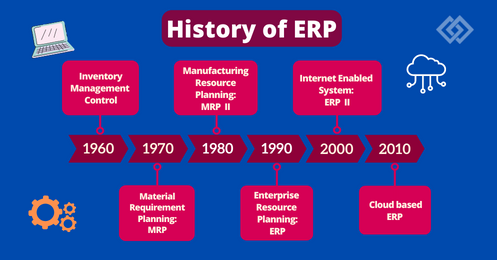
Cloud ERP is enterprise software that runs core finance and operations processes over the internet...
Choosing Financial Software for a PE-Backed Company
Financial software solutions for private equity combine an ERP platform with the finance processes, reporting and controls that sponsors expect. The right solution gives management a faster close and better decisions, and gives the PE firm consistent, trustworthy numbers across the portfolio.
Signs your current financial systems are holding you back
- Month-end close takes weeks and depends on spreadsheets and manual journal entries.
- Consolidating results across entities or acquisitions requires rework every reporting cycle.
- Investor, lender and board reports are built by hand and are hard to reconcile.
- Different companies in the portfolio use different charts of accounts and definitions.
- Audit preparation and due diligence requests consume weeks of finance team time.
- Licensing costs grow every time you add users, entities or locations.
What we deliver
Software selection. We match your requirements, entity structure and industry to the right platform, with Acumatica as our core ERP as an Acumatica Gold Partner.
Implementation and configuration. We configure the general ledger, accounts payable, accounts receivable, cash management, fixed assets and the operational modules each business needs, and integrate them with the tools you keep.
Reporting and consolidation. We build consolidated reporting, dashboards and KPI packs so operating partners and management see the same numbers in real time.
CFO-level financial strategy. Our finance professionals help with GAAP compliance, chart of accounts design, internal controls, budgeting and forecasting, and exit-ready financial statements, as interim or ongoing support.
Our approach
Every engagement follows a clear path: discovery and goal setting, process and reporting design, configuration and data migration, testing and training, then go-live support and continuous improvement. The aim is a system your team actually uses, with less manual work and better visibility from the first close after go-live.
Frequently Asked Questions
Is this only for private equity firms? Our work is built for PE firms and their portfolio companies, and we also support related organizations such as law firms, management services organizations and consulting firms.
Can you work with our existing accounting team? Yes. We work alongside your controller and finance staff, train them on the new processes and can provide interim CFO or controller support where gaps exist.
How long does an implementation take? It depends on scope, data and the number of entities, but our methodology is designed for private equity timelines rather than open-ended projects. Use our ERP implementation cost calculator for a first estimate.
Where can I learn more? Read about financial consolidation, the general ledger and financial reporting in our Knowledge Center, or book a free consultation.
Key Capabilities of Modern Financial Software
- General ledger and multi-entity accounting: a single, well-structured chart of accounts with separate ledgers for each company and automated intercompany entries.
- Accounts payable automation: invoice capture, approval workflows and payment runs that reduce manual entry and strengthen controls.
- Accounts receivable and collections: faster invoicing, customer statements and visibility into days sales outstanding.
- Cash management: bank reconciliation, cash forecasting and visibility across all accounts and entities.
- Budgeting and forecasting: plans built in the same system as actuals, so variances are visible as soon as the books close.
- Financial reporting and dashboards: consolidated statements, KPI packs and drill-down to the underlying transactions.
- Audit trails and security: role-based access, approval history and documentation that support audits and due diligence.
Measuring Success
A financial software project should deliver measurable improvements. Typical measures include the number of days to close the books, the time spent preparing investor and lender reports, the volume of manual journal entries, the number of spreadsheets used for consolidation and the speed of responding to due diligence requests. We agree these measures at the start of each engagement so progress can be tracked after go-live.
Cloud Versus On-Premise
Most PE-backed companies now choose cloud ERP because it removes server maintenance, supports remote teams and scales easily as entities are added. For a deeper comparison, read SaaS hosting versus private cloud server hosting and what cloud ERP means for private equity.
Related Services
Explore our ERP implementation, ERP selection and ERP consulting services, or talk to our team about your financial systems.
Industries We Support
Our financial software solutions serve private equity firms and portfolio companies in professional services, healthcare, distribution, manufacturing, construction, field service and agriculture, as well as law firms and management services organizations. Each industry brings its own requirements, from project accounting and revenue recognition to inventory valuation and job costing, and the ERP configuration reflects them from day one.
From First Call to Go-Live
A typical engagement begins with a free consultation and a short discovery phase to understand your entities, processes and reporting. We then agree scope, budget and timeline, design and configure the system with your team, migrate and validate data, train users and support the first month-end closes on the new platform. Throughout, you have a single team accountable for both the software and the finance outcomes.
Frequently Asked Questions
Do you replace our accountants? No. We strengthen your team with better systems, clearer processes and, where useful, interim CFO or controller support.
Can reports be tailored for our investors? Yes. Investor, lender and board reporting packs are designed with you and generated directly from the ERP.
Month-End Close: Before and After
Before a modern ERP, many PE-backed finance teams spend the first weeks of each month exporting data from separate systems, reconciling intercompany balances in spreadsheets and rebuilding the same reports by hand. After implementation, transactions flow into one ledger, intercompany entries and eliminations are automated, bank reconciliation is faster and reports refresh directly from the system. The finance team spends less time assembling numbers and more time explaining them, which is exactly what operating partners and lenders need.
Controls That Support Audits and Due Diligence
Approval workflows, segregation of duties, role-based security and a complete audit trail are configured as part of every implementation. These controls reduce the risk of errors, make annual audits more efficient and give buyers confidence during due diligence, because every number can be traced back to its source transaction.
Budgeting, Forecasting and Planning
When budgets and forecasts live in the same system as actual results, management can see variances as soon as the books close and update forecasts with confidence. We configure budgeting by entity, department and project, build rolling forecasts and connect them to the reporting packs used by operating partners and lenders. Learn more about ERP-driven budgeting and forecasting in our Knowledge Center.
Financial Reporting for Sponsors and Lenders
Private equity sponsors and lenders expect timely, consistent and accurate reporting. We design reporting packs that combine consolidated financial statements, covenant metrics, KPIs and commentary, generated directly from the ERP rather than assembled in spreadsheets. Because every figure traces back to its source transactions, finance teams can answer questions quickly and with confidence, and the same reports support board meetings, refinancing and due diligence.