
Enterprise Resource Planning (ERP) failure occurs after go-live, not during implementation....
ERP for Distribution Companies Built for Private Equity Value Creation
Distribution ERP software determines post-acquisition EBITDA improvement speed, TSA compliance timelines, and LP reporting quality making it a value creation decision, not an IT one. According to McKinsey's Global Private Markets Report 2026, operational value creation is now the primary source of PE returns as multiple expansion and leverage, which drove 59% of returns between 2010 and 2022, compress. Acumatica Distribution ERP deploys in 60–90 days for PE-backed wholesale distribution companies from post-acquisition integration through pre-exit readiness. Acumatica produces measurable EBITDA improvement across the hold period, confirmed across PE-backed distribution protocols on the Acumatica FastTrack deployment methodology.
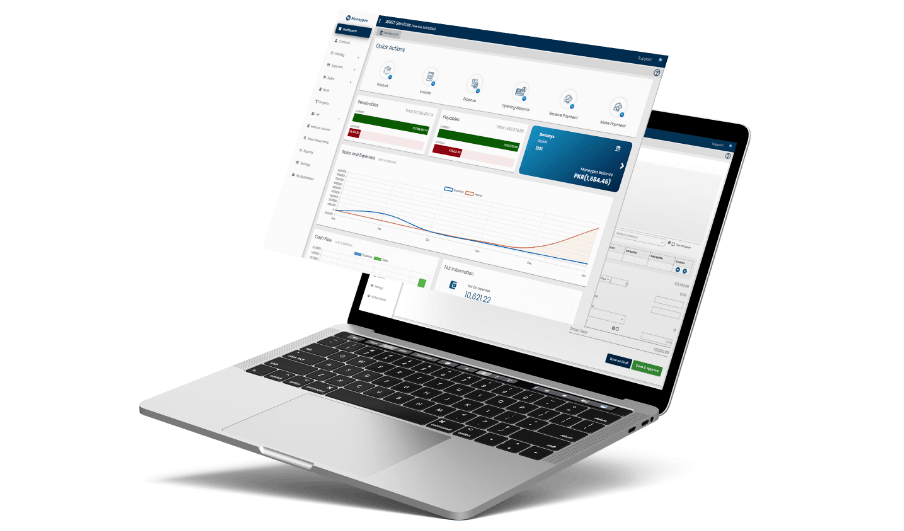
Distribution Portfolios We've Deployed on Acumatica



.jpg "Bob-Davis-Sales-retina-logo (2)")
Distribution ERP Is No Longer an IT Decision - It's a Value Creation Lever
Distribution ERP software determines post-acquisition EBITDA improvement speed, TSA compliance timelines, and LP reporting quality, making it a value creation decision, not an IT one. Wrong ERP selection adds direct cost to post-acquisition integration and delays operational efficiency gains across the entire hold period.
Most PE-backed distributors operate on legacy on-premise wholesale distribution software built for a single entity. These platforms lack real-time supply chain visibility, multi-entity financial consolidation, and the distribution accounting software LP reporting requires. Every month a legacy ERP system operates without replacement and delays the value creation plan.
The average ERP implementation for distribution companies runs 9 months (Panorama Consulting Group, 2025). For a PE-backed distribution company operating under a 90-180 day TSA deadline, a 9-month standard implementation timeline means EBITDA improvement stalls before the system goes live. The ERP system selected at close determines the pace of operational transformation across the entire hold period.
.png)
7 Distribution ERP Problems That Reduce EBITDA in Wholesale Distribution Portfolios
PE-backed distribution companies inherit 7 categories of ERP-driven margin compression at acquisition close. Each compound across the hold period.
Most acquired distributors run on-premise wholesale distribution software built for a single entity. These systems carry no integration roadmap and no migration path into a modern distribution ERP framework. Full system migration averages 9 months for mid-market organizations (Panorama Consulting Group, 2025) , a timeline that conflicts directly with TSA deadlines.
According to the Netstock Inventory Management Benchmark Report (2024), excess stock averages 38% of total inventory among SMB distributors. Excess inventory ties up working capital, increases carrying costs, and reduces operating profitability until it is cleared.
Per-user ERP licensing on NetSuite runs $99-$199/user/month and on SAP Business One runs $39-$150/user/month (BrokenRubik, 2026). A 200-person distribution portco on NetSuite reaches $238,800-$477,600 annually in user licensing before modules, support, or implementation costs. Every headcount addition across a buy-and-build portfolio multiplies this cost without a corresponding increase in system capability.
Manual financial consolidation across multiple entities extends month-end close cycles to 11-14 days for bottom-quartile performers (APQC, 2017). Board packages reflect data nearly two weeks out of date. Operating partners make portfolio decisions on financial results that no longer reflect current performance.
Broken EDI connections force manual order entry across the supply chain. Manual order processing costs $38 per transaction compared to $1.35 per automated EDI transaction (Commport, 2024) a headcount cost that scales directly with order volume and compounds across every add-on acquisition in a buy-and-build portfolio.
Each add-on acquisition in a buy-and-build strategy operates on a different wholesale distribution ERP system, typically 3 or more incompatible platforms across a mid-size portfolio. Without a unified wholesale distribution system, there is no single source of truth for financial consolidation, inventory data, or portfolio-level performance reporting.
Transition Service Agreements set hard technology exit deadlines - typically 90-180 days post-close. Between 55-75% of ERP implementations fail when timelines are compressed and testing is inadequate (Deloitte). Distribution ERP implementations scoped against TSA deadlines without a structured deployment methodology produce adoption failures, post-close system instability, and delayed operational transformation.
Acumatica Distribution ERP - Where Speed, Scalability, and PE Expertise Meet
Acumatica Distribution ERP is a cloud-based ERP for distributors and wholesale distribution businesses - purpose-built for distributor ERP software requirements across every operational layer. Acumatica's FastTrack Deployment methodology delivers core distribution ERP go-live in 90 days or fewer (Acumatica) - aligned with TSA deadlines and PE value creation timelines.
The platform addresses 9 operational areas that directly determine EBITDA performance in a PE-backed distribution portfolio:
|
Capability |
What It Does |
PE Outcome |
|
Multi-warehouse inventory |
Real-time stock across all locations |
Stop margin leakage |
|
Order-to-cash automation |
Eliminate manual AR workflows |
Accelerate cash conversion cycle - manual AR processes carry DSO 30% longer than automated peers (PYMNTS / American Express) |
|
Multi-entity financials |
Native intercompany consolidation |
Clean LP reporting |
|
Consumption-based pricing |
No per-user fees |
Predictable cost at portfolio scale |
|
EDI automation |
Automate supplier/customer data exchange |
Reduce headcount cost |
|
Mobile WMS + barcoding |
Streamline pick/pack/ship |
Cut warehouse labor costs |
|
Demand planning |
Forecast-driven replenishment |
Reduce working capital in inventory |
|
AI-powered AP automation |
Intelligent invoice processing |
Faster period-end close |
|
Role-based dashboards |
KPIs for every stakeholder level |
Operating partner visibility |
Supporting Your Distribution Investment from Due Diligence to Exit
Acumatica Distribution ERP supports PE-backed wholesale distribution companies across 3 phases of the investment lifecycle.
Phase 1
Pre-Acquisition ERP Due Diligence
Phase 2
Post-Acquisition Value Creation (60–90 Day Deployment)
Phase 3
Pre-Exit Readiness
ERP due diligence evaluates the target's distribution ERP system health before the deal closes. A structured technology assessment surfaces system debt, quantifies integration costs, and identifies risks that affect the acquisition price and post-close timeline.
Skipping ERP due diligence transfers technology liability directly into the deal model. One RSM client faced $30 million in ERP upgrade costs not identified until after close (RSM). Pre-acquisition technology diligence gives the buyer the data to negotiate those costs or exit the deal before close.
ERP due diligence covers 4 assessment areas
1
System age, end-of-life status, and vendor support continuity
2
Customization debt and full system migration complexity
3
Integration dependencies across EDI, WMS, and third-party platforms
4
Data quality and financial reporting integrity against LP reporting standards
Post-acquisition distribution ERP implementation follows the value creation plan, not a generic template. The Acumatica 60–90 day deployment framework aligns with TSA transition deadlines — delivering clean financials, automated workflows, and operational transformation from Day 1 (Acumatica FastTrack).
The deployment covers 3 sequential phases
1
Discovery and configuration — chart of accounts standardization, entity structure mapping, and workflow design against the value creation plan
2
Data migration and integration — EDI connections, WMS activation, and legacy data cutover
3
Go-live and reporting activation — LP dashboards, operating partner KPIs, and EBITDA improvement tracking configured for Day 1 reporting
Buyers audit financials. A clean financial audit trail, intercompany eliminations, and board-level reporting are exit leverage. Exit-ready ERP environments establish a single source of truth that passes quality of earnings analysis and supports data room preparation across all distribution entities in the portfolio.
Pre-exit ERP readiness covers 3 deliverables
1
GAAP-compliant multi-entity financial consolidation with ASC 810 intercompany eliminations
2
Board-level LP dashboards with entity-level and portfolio-level EBITDA quality of earnings reporting
3
Full transaction audit trail across all warehouse, order, and financial operations — data room ready
Phase 1
Pre-Acquisition ERP Due Diligence
ERP due diligence evaluates the target's distribution ERP system health before the deal closes. One RSM client faced $30 million in ERP upgrade costs not identified until after close (RSM).
4 assessment areas
1
System age, end-of-life status, and vendor support continuity
2
Customization debt and full system migration complexity
3
Integration dependencies across EDI, WMS, and third-party platforms
4
Data quality and financial reporting integrity against LP reporting standards
Phase 2
Post-Acquisition Value Creation (60–90 Day Deployment)
Post-acquisition distribution ERP implementation follows the value creation plan, not a generic template. The Acumatica 60–90 day deployment framework aligns with TSA transition deadlines — delivering clean financials and operational transformation from Day 1.
3 sequential deployment phases
1
Discovery and configuration — chart of accounts standardization, entity structure mapping, and workflow design
2
Data migration and integration — EDI connections, WMS activation, and legacy data cutover
3
Go-live and reporting activation — LP dashboards, operating partner KPIs, and EBITDA tracking from Day 1
Phase 3
Pre-Exit Readiness
Exit-ready ERP environments establish a single source of truth that passes quality of earnings analysis and supports data room preparation across all distribution entities in the portfolio.
3 exit readiness deliverables
1
GAAP-compliant multi-entity financial consolidation with ASC 810 intercompany eliminations
2
Board-level LP dashboards with EBITDA quality of earnings reporting
3
Full transaction audit trail across all operations — data room ready
Distribution ERP Expertise Across Every Vertical in Your Portfolio
Acumatica Distribution ERP supports 6 wholesale distribution sub-verticals within a single platform instance - industrial and MRO, food and beverage, pharma and medical supply, building materials and lumber, consumer goods and wholesale, and electronics and technology. Each sub-vertical runs configured workflows without separate implementations or additional licensing costs.
Industrial and MRO distribution environments manage high-SKU inventory with complex pricing structures and multi-warehouse stock requirements. Acumatica's industrial distribution software handles lot tracking, contract pricing, and real-time inventory visibility across all warehouse locations. Operating partners gain direct visibility into the inventory layers that determine margin performance at the entity level.
Food and beverage distributors operate under FSMA compliance requirements. These include biannual FDA registration, hazard analysis-based food safety plans, and food defense vulnerability assessments. The average cost of a single food recall reaches $10 million in direct expenses, excluding brand damage and lost sales (Food Marketing Institute and Consumer Brands Association). Acumatica's food distribution ERP software handles expiry date management, FEFO inventory rotation, batch tracking, and FSMA-compliant recordkeeping.
Pharma and medical supply distributors operate under the Drug Supply Chain Security Act (DSCSA), which mandates full serialization and electronic traceability for all prescription drug packages across the supply chain. Wholesale pharmaceutical distributors reached their DSCSA enhanced serialization compliance deadline on August 27, 2025 (FDA). Acumatica supports FDA 21 CFR compliance requirements, unit-level serialization, lot and batch tracking, and cold chain management - ensuring every product movement is traceable and defensible in an FDA audit.
Building materials and lumber distribution requires variable unit-of-measure selling, jobsite delivery scheduling, and contractor-specific pricing. These 3 operational requirements demand purpose-built distribution ERP software for distribution companies operating in the building materials vertical. Acumatica handles all three within the core platform without customization overhead.
Consumer goods distributors manage omnichannel order streams across Amazon, EDI trading partners, and direct wholesale channels simultaneously. Acumatica's wholesale and distribution software connects all three channels into a single unified order management environment. Fulfillment gaps that fragment customer margin across disconnected systems are eliminated at the platform level.
Electronics and technology distributors require serial number tracking, RMA management, and global supply chain traceability across every transaction. Acumatica's electronics distribution software provides serialization control and supplier relationship visibility across every transaction, return, and supplier relationship.
Why PE Firms Choose Acumatica Over NetSuite, SAP, and Legacy ERPs for Distribution
PE firms compare 5 platforms for PE-backed distribution companies. Acumatica outperforms all 5 on the 4 criteria that determine value creation speed.
-
Deployment speed fits TSA deadlines :Acumatica deploys in 60–90 days. NetSuite averages 6–12 months, SAP 9–18 months (Panorama, 2025). A 9-month implementation does not fit a 90–180 day TSA deadline.
-
No per-user licensing cost explosions :Acumatica charges by transaction volume, not user count. A 200-person portco on NetSuite costs $238,800–$477,600 annually in licensing alone (BrokenRubik, 2026). Acumatica eliminates that cost entirely.
-
Native multi-entity built for roll-ups: Acumatica supports unlimited entities in one instance from Day 1. NetSuite requires the OneWorld add-on at additional cost.
-
PE lifecycle support no competitor offers :NetSuite, SAP, Infor, and Epicor enter the picture after close. ERP for Private Equity deploys Acumatica across all 3 investment phases due diligence, value creation, and exit readiness scoped against the value creation plan, not a vendor template.
Testimonials
ERP for Private Equity deployed Acumatica across our distribution portco in 74 days — inside our TSA deadline and against our value creation plan. Month-end close dropped from 13 days to 4. No other partner understood PE timelines the way they did
We were running three acquired distributors on three different legacy systems. ERP for Private Equity standardized all three onto Acumatica in one deployment cycle. Consolidated financials now close in under 5 days. The LP reporting quality improvement was immediate
ERP for Private Equity completed our Acumatica due diligence assessment before LOI. It surfaced $400K in hidden integration costs we negotiated out of the deal price. That alone covered the entire engagement fee.
Frequently Asked Questions
Acumatica Distribution Edition is the best ERP for PE-backed distribution companies, delivering consumption-based pricing, native multi-entity consolidation, and 60-90 day deployment in a single platform. It eliminates per-user licensing costs of $99-$199/user/month charged by NetSuite (BrokenRubik, 2026) and $100-$150/user/month charged by SAP Business One. Native multi-entity architecture supports intercompany eliminations, standardized chart of accounts, and portfolio-level LP reporting from Day 1. Among evaluated wholesale distribution ERP platforms, Acumatica combines PE lifecycle support, deployment speed, and consumption-based pricing in a single wholesale distributor software solution.
Acumatica Distribution ERP goes live in 60-90 days post-acquisition when scoped against a PE value creation plan and TSA transition deadline. Standard ERP implementations average 9 months for mid-market organizations (Panorama Consulting Group, 2025). The 60-90 day framework covers discovery and configuration, data migration and integration, and go-live with LP reporting activation. Deployments scoped against a value creation plan align implementation scope with operational outcomes from Day 1.
Acumatica uses consumption-based pricing - costs scale with transaction volume and business activity, not user count. Each add-on acquisition joins the existing platform instance without triggering additional per-user licensing costs. For a 200-person distribution portfolio on NetSuite, per-user licensing reaches $238,800-$477,600 annually before modules or support costs (BrokenRubik, 2026). Acumatica's consumption-based model eliminates per-user licensing costs, replacing them with transaction-volume-based tiers that scale with business activity.
Distribution ERP software optimizes order management, multi-warehouse inventory velocity, EDI automation, and supplier-to-customer fulfillment - the core workflows of wholesale distribution businesses. Manufacturing ERP centers on production planning, bill of materials management, and shop floor control. Distribution-specific ERP platforms include purpose-built functionality for FEFO inventory rotation, catch-weight selling, and EDI trading partner automation. Acumatica Distribution ERP serves wholesale distributors and erp software for wholesale distribution requirements across 6 sub-verticals within a single platform.
Acumatica's multi-entity architecture supports roll-up acquisition strategies by onboarding each add-on acquisition into the same ERP instance without re-implementation. Every acquired entity operates on a standardized chart of accounts within a unified wholesale management system from Day 1. Intercompany eliminations execute natively across the portfolio. Portfolio-level dashboards surface across all entities without custom development, delivering operating partner visibility at acquisition pace.
ERP due diligence covers 4 assessment areas - system age and end-of-life status, customization debt and migration complexity, integration dependencies across EDI and WMS platforms, and data quality against LP reporting standards. A distribution target running on an end-of-life ERP system carries technology debt that directly affects post-acquisition integration timelines and costs. Structured ERP technology assessments conducted before close surface hidden integration liabilities before they enter the deal model. PE firms that complete ERP due diligence before close address technology risk before it affects the deal model.
Acumatica supports 6 distribution sub-verticals within a single platform instance - industrial and MRO, food and beverage, pharma and medical supply, building materials and lumber, consumer goods and wholesale, and electronics and technology. Each sub-vertical runs configured operational workflows without separate instances, separate implementations, or additional licensing costs. FSMA compliance is handled natively for food and beverage distributors. DSCSA serialization requirements are met for pharma and medical supply distributors, with wholesale distributor compliance finalized August 27, 2025 (FDA). A PE portfolio spanning multiple distribution verticals operates on one wholesale distribution ERP environment with shared financial infrastructure.
Read Our Latest Blog
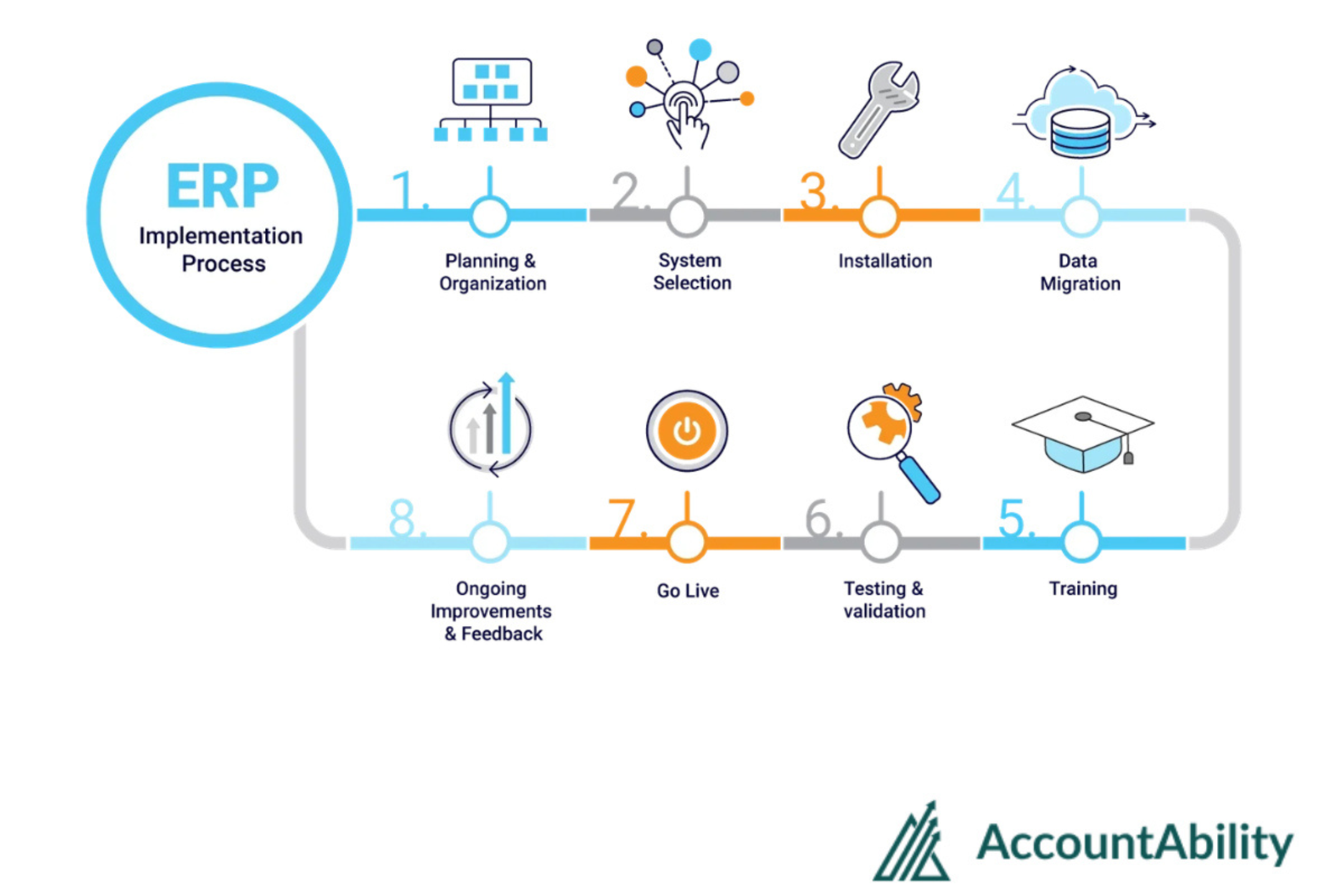
According to Bain & Company, 60% of post-acquisition value creation plans are delayed by...

Lessons from ACG Events

The ACG Florida Capital Connection is nearly here, and Accountability is excited to be on-site...