Acumatica ERP Software for Manufacturing
Manufacturing companies on legacy ERP systems experience EBITDA erosion from production inefficiencies, inventory write-offs, and delayed financial close cycles. Acumatica manufacturing ERP protects and grows EBITDA by delivering real-time shop floor visibility, automated inventory control, and consolidated multi-entity financial reporting. ERP for Private Equity implements Acumatica as a certified Gold Partner for PE-backed mid-market manufacturers across the United States.

Acumatica-Certified Partner for Manufacturing ERP Implementation
.jpg?width=1440&height=696&name=ERP%20Software%20for%20Manufacturing%20by%20erp%20fro%20private%20equity%20(1).jpg)
What Is ERP Software for Manufacturing?
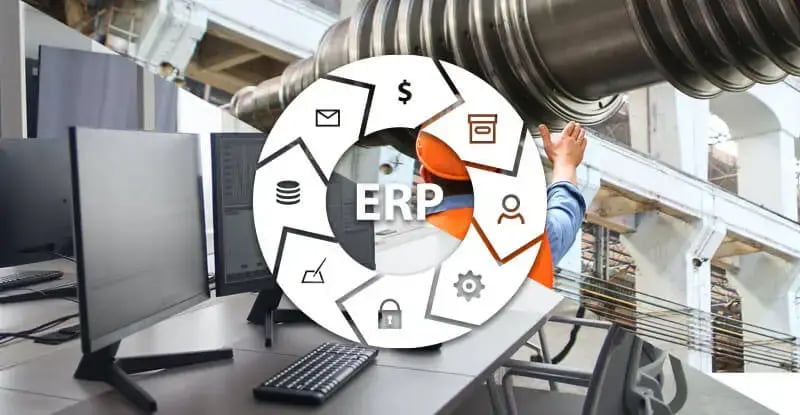
ERP software for manufacturing is a cloud-native business management platform that connects production planning, inventory control, shop floor operations, supply chain management, and financial reporting into one unified system. Manufacturing ERP eliminates data silos across 5 core departments production, procurement, warehouse, quality control, and finance giving CFOs and COOs real-time operational visibility across single and multi-site manufacturing environments. Acumatica manufacturing ERP extends this capability with 3 additional functions specific to PE-backed manufacturers: multi-entity financial consolidation, post-acquisition ERP deployment, and portfolio-wide EBITDA reporting.
Manufacturing Industries Served by Acumatica ERP
Acumatica manufacturing ERP serves 5 primary industries — food and beverage, industrial equipment, chemicals and life sciences, electronics and high-tech, and consumer goods. Each industry receives purpose-configured ERP modules aligned to its production model, compliance requirements, and financial reporting structure.
Acumatica ERP connects recipe management, batch tracking, lot traceability, and expiry date control for food and beverage manufacturers operating under FDA and FSMA compliance requirements. PE-backed food and beverage manufacturers gain multi-entity financial consolidation across multiple production facilities.
Acumatica ERP delivers 5 purpose-built modules for food and beverage manufacturing:
- Recipe & Formula Management — controls ingredient quantities, substitutions, and batch scaling across production runs
- Lot & Batch Traceability — tracks raw materials from supplier receipt through finished goods delivery
- Expiry Date Management — automates FEFO inventory rotation across warehouse locations
- FDA & FSMA Compliance Tracking — maintains audit-ready documentation for regulatory inspections
- Multi-Entity Financial Consolidation — reports EBITDA across multiple food production facilities in real time
Acumatica ERP manages engineer-to-order production, complex bill of materials, and project-based cost accounting for industrial equipment manufacturers producing custom machinery, heavy equipment, and engineered components.
Acumatica ERP delivers 5 purpose-built modules for industrial equipment manufacturing:
- Engineer-to-Order (ETO) Management — connects engineering, procurement, and production for custom equipment builds
- Multi-Level BOM Control — manages complex component hierarchies across assembled and sub-assembled parts
- Project Cost Accounting — tracks material, labor, and overhead costs against individual production orders
- Subcontractor Management — controls outsourced production activities within the main production schedule
- Shop Floor Control — provides real-time work order visibility across machining, assembly, and testing stages
Acumatica ERP manages formula management, hazardous material tracking, and GMP compliance documentation for chemical and pharmaceutical manufacturers operating under EPA, FDA, and GMP regulatory frameworks.
Acumatica ERP delivers 5 purpose-built modules for chemicals and life sciences manufacturing:
- Formula & Recipe Management — controls chemical formulations, concentrations, and batch scaling across production runs
- Hazardous Material Tracking — manages storage, handling, and disposal documentation for regulated substances
- GMP Compliance Documentation — maintains production records aligned to Good Manufacturing Practice standards
- Quality Control & Testing — records in-process and finished goods testing results against specification limits
- Lot Traceability — tracks chemical batches from raw material intake through finished product distribution
Acumatica ERP manages serial number tracking, multi-level BOM management, and demand forecasting for electronics manufacturers producing circuit boards, semiconductors, and high-tech components across multi-site assembly operations.
Acumatica ERP delivers 5 purpose-built modules for electronics and high-tech manufacturing:
- Serial Number Tracking — monitors individual components and finished units across production and distribution
- Demand Forecasting — aligns procurement and production schedules to component availability and customer demand
- Multi-Level BOM Management — controls component hierarchies across circuit board assembly and sub-assembly stages
- Warranty & Returns Management — tracks warranty claims, repair orders, and returned goods against original production records
- Multi-Site Production Control — manages assembly operations across multiple manufacturing locations in real time
Acumatica ERP manages make-to-stock production planning, demand forecasting, and multi-channel distribution control for consumer goods manufacturers producing packaged goods, personal care products, and household items across high-volume production runs.
Acumatica ERP delivers 5 purpose-built modules for consumer goods manufacturing:
- Make-to-Stock Production Planning — aligns production schedules to forecasted demand across seasonal and promotional cycles
- Demand Forecasting — predicts material requirements and production volumes based on historical sales data
- Warehouse Management — controls picking, packing, and shipping across single and multi-site warehouse locations
- Multi-Channel Distribution — manages order fulfillment across retail, eCommerce, and wholesale distribution channels
- Trade Promotion Management — tracks promotional pricing, retailer deductions, and campaign costs against gross margin targets
Manufacturing ERP Key Features
Acumatica Manufacturing ERP, delivered by ERP for Private Equity, consolidates production, inventory, finance, and compliance into one cloud-native platform built for discrete, process, and mixed-mode manufacturers.
Material Requirements Planning (MRP)
Material Requirements Planning calculates raw material demand, purchase order timing, and production schedules based on real-time inventory levels and sales forecasts. Manufacturers reduce material shortages by 35% and excess inventory carrying costs by 28% using automated MRP workflows.
Production Scheduling & Shop Floor Control
Production scheduling allocates machines, labor, and materials across work centers based on capacity, priority, and delivery deadlines. Shop floor control tracks work orders, labor time, and production output in real time giving plant managers live visibility into every active production run.
Bill of Materials (BOM) Management
Bill of Materials management maintains multi-level BOM structures components, subassemblies, and finished goods with version control, engineering change orders, and cost rollups per assembly. Manufacturers manage unlimited BOM configurations across every product line from one system.
Inventory & Warehouse Management
Inventory management tracks stock levels, lot numbers, serial numbers, and expiry dates across multiple warehouses and locations in real time. Warehouse management controls putaway, picking, packing, and shipping workflows reducing inventory discrepancies by up to 40%.
Financial Management & Cost Accounting
Cost accounting captures direct materials, direct labor, and manufacturing overhead per production order delivering accurate job costing, standard costing, and actual cost variance analysis. PE-backed manufacturers consolidate multi-entity financials, intercompany transactions, and portfolio-level P&L from one general ledger.
Supply Chain & Procurement
Procurement management automates purchase requisitions, vendor selection, PO generation, and three-way matching purchase order, receipt, and invoice within a single workflow. Manufacturers reduce procurement cycle times by 30% and eliminate manual data entry across the supply chain.
Why ERP for Private Equity Is the Right ERP Platform for Manufacturers
ERP for Private Equity, built on Acumatica, gives PE-backed manufacturers a single platform for production management, inventory control, financial consolidation, and compliance reporting — without legacy infrastructure or per-user licensing costs.
- Cloud-Native Architecture — No Server Costs Acumatica deploys on AWS and Azure eliminating on-premise servers, IT maintenance, and hardware refresh cycles. Manufacturing firms access the full platform remotely across every site with 99.9% uptime.
- Unlimited User Pricing Model Acumatica charges by computing resources not per user. Shop floor operators, plant managers, and finance teams access the full platform at no additional seat cost regardless of headcount.
- Real-Time Dashboards & Mobile Access Production schedules, inventory levels, WIP tracking, and financial KPIs update live as transactions occur. Plant managers and field teams access operational data from any device, on any site.
- Built-In Compliance & Audit Trails Every financial transaction, inventory movement, and production order maintains a complete audit trail supporting SOX, ISO 9001, and regulatory reporting requirements natively.
- Scalable Across Single Site or Multi-Entity Operations Multi-entity architecture supports intercompany accounting, multi-currency consolidation, and portfolio-level reporting from a single plant to a 10-site PE manufacturing portfolio.

What Customer Say About Our Services?
Before ERP for Private Equity, our month-end close took 12 days across four entities. On Acumatica, we close in 3 days. Project-level profitability is visible in real time — our PE sponsors now get the reporting they need without chasing the finance team.
We were running timesheets in one tool, billing in another, and financials in a third. ERP for Private Equity consolidated everything onto Acumatica in 10 weeks. Billable utilization improved by 22% in the first quarter after go-live.
Acumatica gave our firm real-time visibility into matter-level profitability for the first time. ERP for Private Equity delivered a structured implementation with zero disruption to active client engagements. Our billing cycle shortened from 14 days to 4.
Ready to Modernize Your Manufacturing Operations with Acumatica?
ERP for Private Equity, built on Acumatica, gives PE-backed manufacturers real-time production visibility, automated compliance, and consolidated multi-entity financials deployed in 8–12 weeks without disruption to active operations.
Frequently Asked Questions
ERP (Enterprise Resource Planning) solutions are integrated software platforms that consolidate core business functions finance, procurement, production, inventory, HR, and reporting into one connected system. Manufacturing firms use ERP to eliminate data silos, automate workflows, and maintain real-time operational visibility across every department and entity.
MRP (Material Requirements Planning) calculates raw material demand, purchase order timing, and production schedules based on inventory levels and sales forecasts. ERP extends MRP by adding financial management, HR, CRM, compliance, and multi-entity reporting. MRP manages production inputs. ERP manages the entire business.
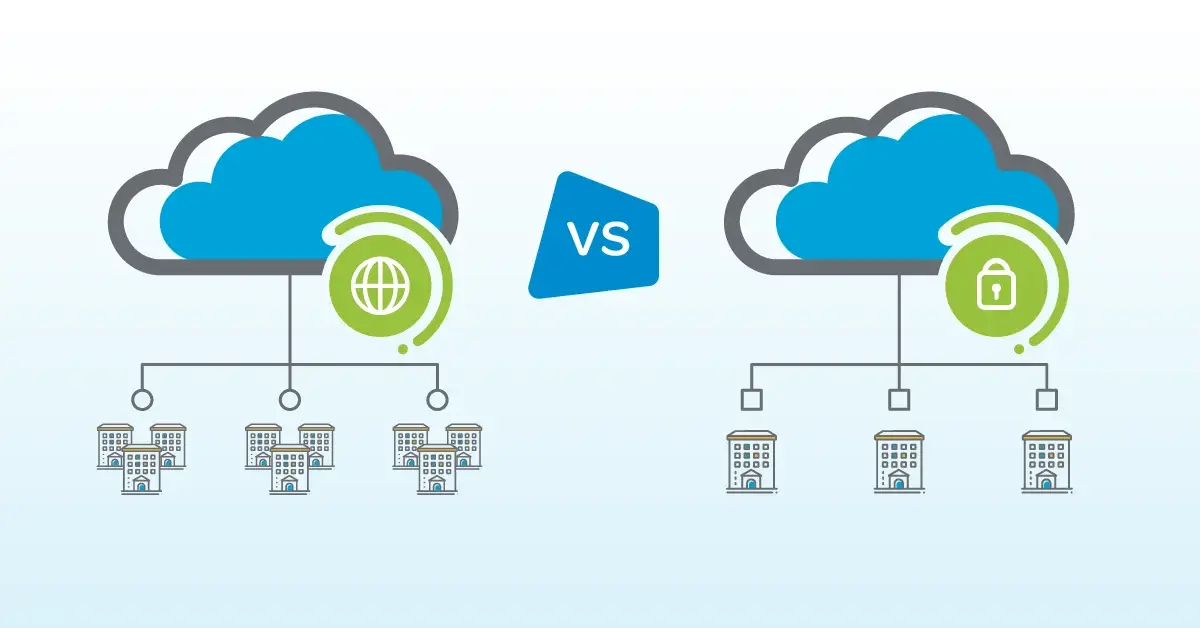
The 3 common types of ERP are cloud ERP, on-premise ERP, and hybrid ERP.
- Cloud ERP — Hosted on remote servers (AWS, Azure). No hardware required. Automatic updates. Acumatica is cloud-native. Deployment averages 8–12 weeks.
- On-Premise ERP — Installed on company-owned servers. Full data control. Higher upfront infrastructure cost. Average deployment: 12–18 months.
- Hybrid ERP — Combines cloud and on-premise modules. Used by manufacturers transitioning from legacy systems. Offers deployment flexibility across multiple sites.
The best manufacturing ERP platform matches your production model — discrete, process, or mixed-mode — and supports your financial structure, compliance requirements, and growth plan. Evaluate 6 criteria:
- Production Model Fit — Does it support your BOM complexity, work order structure, and shop floor control requirements?
- Financial Capabilities — Multi-entity consolidation, cost accounting, and intercompany accounting for PE-backed operations.
- Compliance Coverage — Native support for ISO 9001, SOX, and FDA 21 CFR Part 11 where applicable.
- Implementation Timeline — Cloud ERP deploys in 8–12 weeks. On-premise averages 14–18 months.
- Pricing Model — Resource-based pricing (Acumatica) eliminates per-user fees. Per-user models increase cost as headcount grows.
- Scalability — Multi-site, multi-currency, and multi-entity support for PE portfolio expansion.
Successful manufacturing ERP implementation follows 5 structured phases — each completed before the next begins.
- Discovery & Scoping — Map current workflows, data structures, and integration requirements across every department.
- System Configuration — Configure production modules, chart of accounts, BOM structures, and approval workflows to match operations.
- Data Migration — Clean, validate, and migrate inventory records, supplier data, customer accounts, and financial history.
- Testing & Training — Conduct parallel runs, user acceptance testing (UAT), and role-specific training across shop floor, finance, and management teams.
- Go-Live & Optimization — Deploy in phases — finance first, then production, then warehouse — to minimize operational disruption.
Manufacturing ERP implementation takes 8–12 weeks for cloud ERP on mid-size operations and 14–18 months for on-premise enterprise deployments. Timeline depends on 4 factors:
- Company size — Single-site manufacturers deploy faster than multi-entity PE portfolios.
- Data complexity — Clean, structured legacy data reduces migration time by 30–40%.
- Customization level — Configurable cloud ERP (Acumatica) deploys faster than heavily customized on-premise systems.
- User readiness — Firms with structured change management programs reduce go-live delays by 45%, according to Panorama Consulting's 2023 ERP Report.
Manufacturing ERP integrates with 6 core operational systems to eliminate manual data transfer and maintain real-time accuracy across the production environment.
- MES (Manufacturing Execution Systems) — Real-time production tracking, machine status, and labor reporting at shop floor level.
- CAD/PLM Software — Product lifecycle management and engineering change orders feed directly into BOM management.
- WMS (Warehouse Management Systems) — Inventory movements, putaway, picking, and shipping sync with ERP inventory records.
- CRM Platforms — Sales orders, customer pricing, and delivery commitments connect production scheduling to customer demand.
- EDI Systems — Electronic data interchange automates supplier purchase orders, advance ship notices, and invoice processing.
- IoT & Machine Sensors — Real-time machine data feeds production schedules, maintenance triggers, and OEE (Overall Equipment Effectiveness) reporting into ERP dashboards.
Read Our Latest Blog

.png)
.png)