
 Financial Management
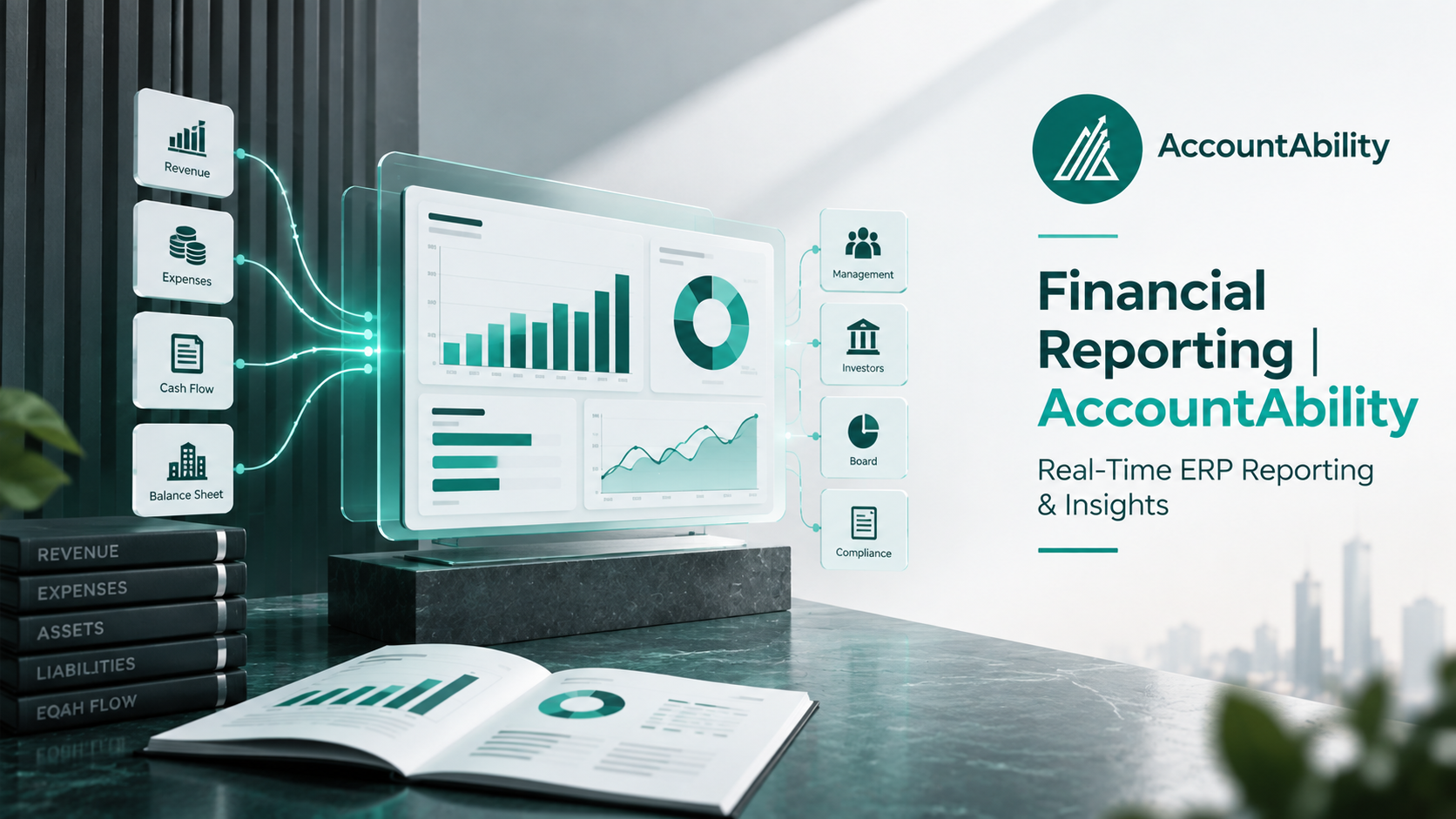
Financial Reporting – Real-Time ERP Reporting & Insights
Financial reporting is the process of collecting, organizing, and presenting financial information to help business leaders, investors, and stakeholders understand an organization's financial health and performance. A modern ERP system transforms financial reporting from a manual, spreadsheet-driven process into real-time, data-driven insights that support faster and more informed decision-making.
Financial reports provide visibility into revenue, expenses, profitability, cash flow, assets, liabilities, and key performance indicators (KPIs), allowing leadership to monitor business performance and make strategic decisions with confidence.
Why It Matters
Accurate financial reporting is the foundation of sound business management.
Without timely and reliable reporting, organizations often struggle to:
- Measure financial performance
- Monitor profitability
- Manage cash flow
- Identify operational trends
- Control expenses
- Support strategic planning
- Make informed executive decisions
A modern ERP system provides real-time access to financial information, eliminating the delays and inaccuracies often associated with manual reporting processes.
Effective financial reporting enables leadership to spend less time gathering information and more time acting on it.
Private Equity Perspective
For private equity firms and portfolio companies, financial reporting is much more than producing monthly financial statements.
Operating partners, investors, and executive leadership depend on accurate financial reporting to:
- Monitor portfolio company performance
- Measure EBITDA improvements
- Track value creation initiatives
- Evaluating acquisition performance
- Identify operational inefficiencies
- Support lender and investor reporting
- Prepare for future exits
Consistent financial reporting across portfolio companies creates transparency, improves accountability, and helps leadership make faster, more informed investment decisions.
Common Challenges
Many growing organizations experience challenges such as:
- Multiple spreadsheets producing different results
- Delayed month-end reporting
- Manual report preparation
- Inconsistent reporting across departments
- Limited visibility into KPIs
- Difficulty consolidating financial information
- Lack of real-time executive dashboards
- Data scattered across multiple systems
These challenges often slow decision-making and reduce confidence in financial information.
Best Practices
- Establish standardized financial reporting processes across the organization.
- Automate recurring financial reports whenever possible.
- Create executive dashboards with real-time KPIs.
- Monitor budget versus actual performance throughout the year.
- Reduce dependence on spreadsheets by leveraging ERP reporting tools.
- Review financial reports regularly with department leaders.
- Ensure reporting supports strategic business objectives, not just accounting requirements.
AccountAbility Insight
One of the biggest misconceptions about financial reporting is that it's simply producing an Income Statement and Balance Sheet each month. Effective financial reporting should answer the questions leadership is asking today, not just summarize what happened last month. The organizations that gain the greatest value from ERP use reporting to identify trends, uncover opportunities, and make proactive business decisions before problems become larger issues.
Leadership Perspective
Great financial reporting doesn't just tell you what happened, it helps you understand why it happened and what should happen next.
When executives have access to timely, accurate, and meaningful financial information, they can make faster decisions, improve operational performance, allocate resources more effectively, and create long-term business value.
Executive Questions to Consider
As a business leader, ask yourself:
- Do we receive financial reports quickly enough to make timely decisions?
- Can our leadership team trust the numbers?
- Are our reports consistent across departments and business units?
- Do we spend more time preparing reports than analyzing them?
- Can we identify trends before they become problems?
- Are our KPIs aligned with our strategic business goals?
- Does our ERP provide real-time dashboards, or are we still relying on spreadsheets?
The AccountAbility Framework
When evaluating your financial reporting capabilities, consider these five questions:
✅ Do our reports provide timely and actionable information?
✅ Can leadership easily measure business performance?
✅ Are reporting processes standardized across the organization?
✅ Does our ERP provide a single source of truth?
✅ Are we using financial reporting to drive business decisions—not just close the books?
How AccountAbility Can Help
At AccountAbility, we believe financial reporting should be more than a compliance exercise, it should become a strategic business tool.
Our team helps private equity-backed, multi-entity, and growth-focused organizations leverage ERP to automate financial reporting, improve executive visibility, standardize reporting processes, and deliver meaningful business intelligence that supports better decisions.
Whether you're implementing a new ERP system or optimizing an existing one, we help transform financial data into actionable insights that improve operational performance and maximize the return on your ERP investment.
Related Terms
%20%20AccountAbility%20%E2%80%93%20Smarter%20AP%20Automation.png)
.png)

Ready to Talk?
Schedule a complimentary ERP Strategy Session with one of our experienced consultants.
Book a Strategy Session →