
The AccountAbility ERP Knowledge Center
Expert insights, practical guidance, and proven strategies to help business leaders make smarter ERP decisions.
ERP Fundamentals
 ERP Fundamentals
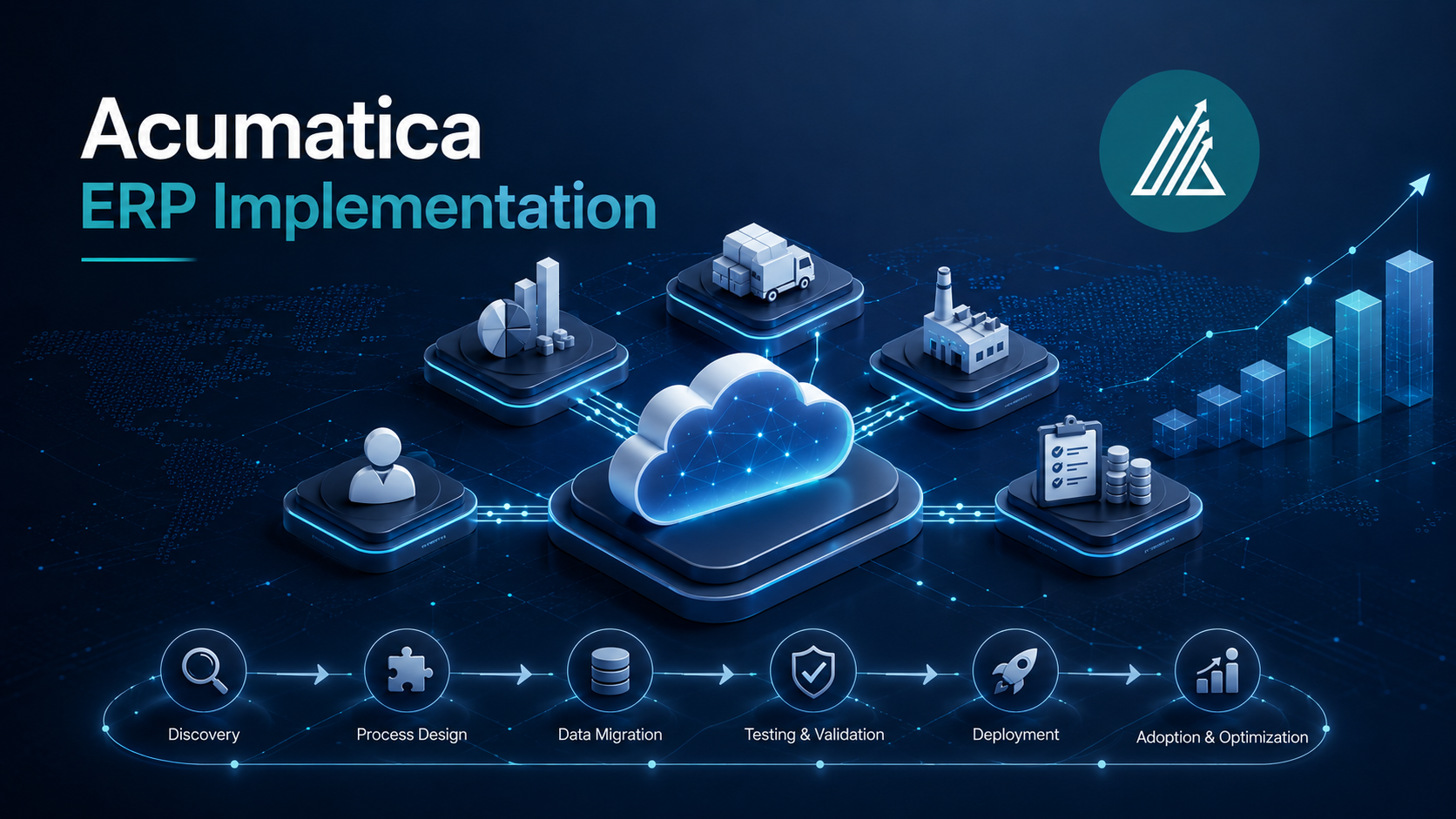
Acumatica ERP Implementation – ERP for Private Equity
Acumatica is a modern cloud-based Enterprise Resource Planning (ERP) platform designed for growing small and mid-market organizations. It provides integrated applications for financial management…
Read article → ERP Fundamentals
Cloud ERP for Private Equity & PE-Backed Companies
Cloud ERP is Enterprise Resource Planning software that is hosted in the cloud and accessed through a secure internet connection. Rather than maintaining on-premises servers and infrastructure, organizations…
Read article → ERP Fundamentals
ERP (Enterprise Resource Planning)
Enterprise Resource Planning (ERP) is business management software that connects an organization's core functions including finance, accounting, operations, inventory, manufacturing, purchasing, sales…
Read article → ERP Fundamentals
ERP Consultant
An ERP consultant is a business and technology advisor who helps organizations evaluate, implement, optimize, and support Enterprise Resource Planning systems. ERP consultants combine technical expertise with…
Read article →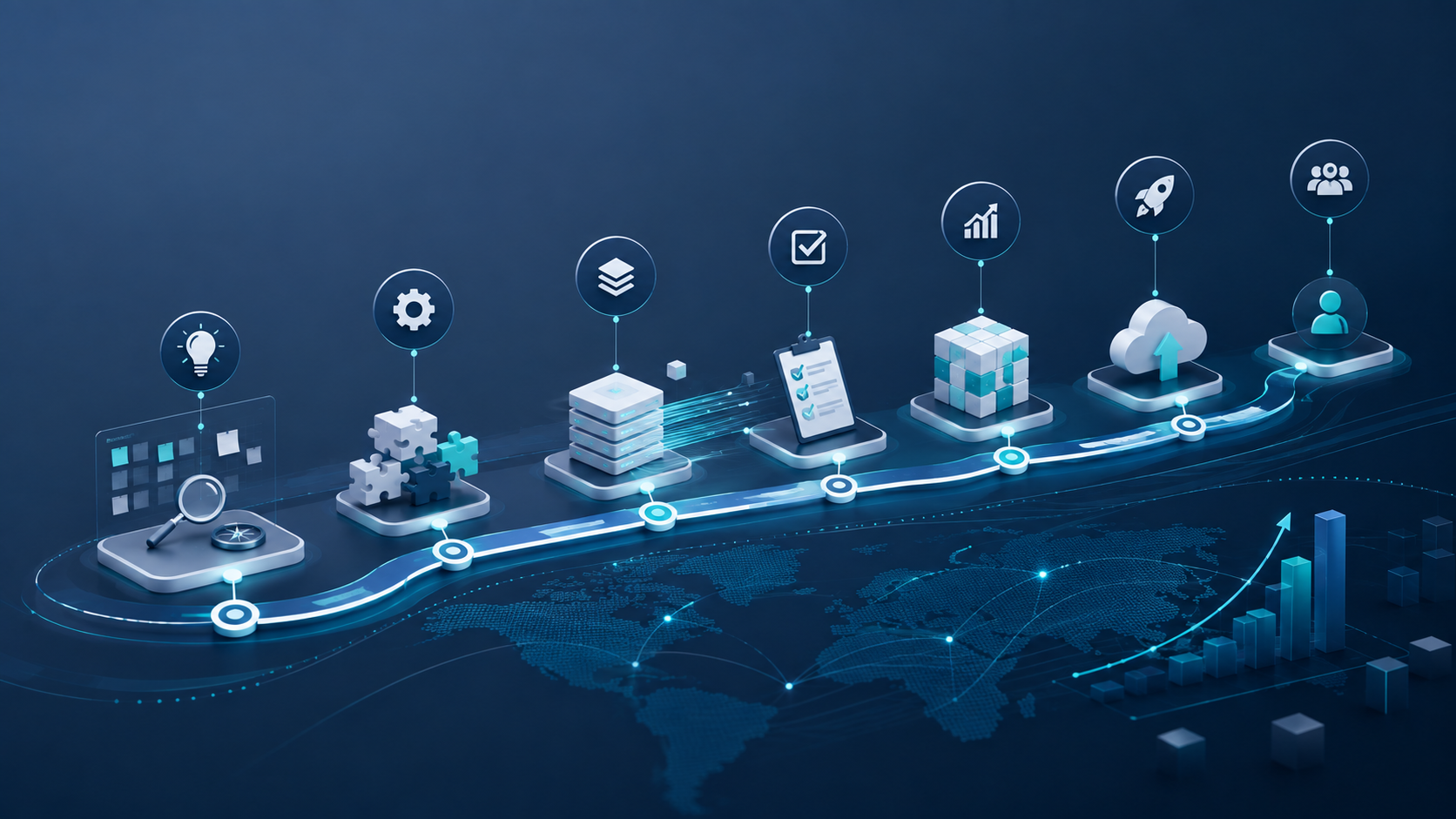 ERP Fundamentals
ERP Implementation
ERP implementation is the structured process of planning, configuring, testing, deploying, and adopting an Enterprise Resource Planning system within an organization. A successful implementation involves much…
Read article →.png) ERP Fundamentals
ERP Fundamentals
ERP ROI (Return on Investment) – Maximizing ERP Value
ERP Return on Investment (ERP ROI) measures the business value an organization receives from its Enterprise Resource Planning (ERP) investment compared to the total cost of implementing, maintaining, and optimizing the system. While financial savings are an important component, ERP ROI also includes operational improvements, increased productivity, better decision-making, and the ability to scale as the business grows.
Read article →.png) ERP Fundamentals
ERP Fundamentals
SaaS ERP for PE-Backed Companies
Software as a Service (SaaS) ERP is a cloud-based Enterprise Resource Planning solution that is delivered over the internet through a subscription model. Instead of purchasing and maintaining software on…
Read article →Financial Management
%20%20AccountAbility%20%E2%80%93%20Smarter%20AP%20Automation.png) Financial Management
Financial Management
Accounts Payable (AP) – Smarter AP Automation
Accounts Payable (AP) is the business process used to manage vendor invoices, approvals, payments, and outstanding obligations. A modern ERP system automates many AP tasks, reducing manual processing while…
Read article →.png) Financial Management
Financial Management
Accounts Receivable | Faster Collections
Accounts Receivable (AR) is the process of managing customer invoices, collections, and incoming payments. Effective AR management ensures organizations maintain healthy cash flow while providing accurate…
Read article →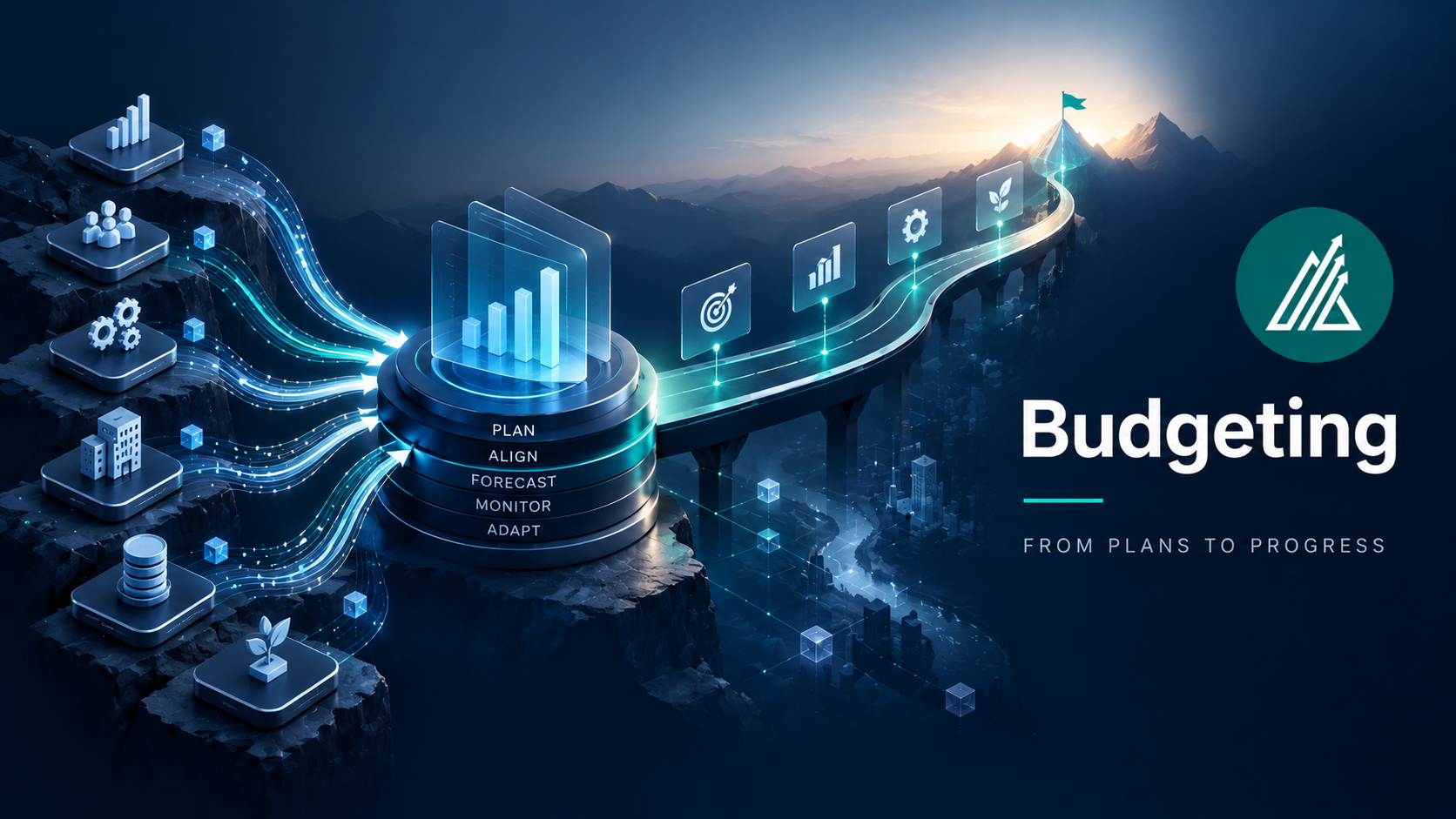 Financial Management
Budgeting – Strategic ERP-Driven Financial Planning
Budgeting is the process of creating a financial plan that estimates an organization's expected revenue, expenses, cash flow, and capital investments over a defined period. A well-developed budget serves as a…
Read article →%20%20AccountAbility%20%E2%80%93%20Scalable%20Financial%20Structure.png) Financial Management
Financial Management
Chart of Accounts (COA) – Scalable Financial Structure
A Chart of Accounts (COA) is the organized framework of all financial accounts used by an organization to record and categorize transactions. It serves as the foundation for financial reporting, budgeting, and…
Read article → Financial Management
ERP Forecasting Tools for Smarter Decisions
Forecasting is the process of projecting future financial and operational performance based on current business trends, historical data, and expected market conditions. Unlike a budget, which establishes…
Read article → Financial Management
Financial Consolidation
Financial Consolidation is the process of combining financial information from multiple entities into one set of consolidated financial statements. The objective is to provide leadership, investors, and…
Read article → Financial Management
Financial Reporting – Real-Time ERP Reporting & Insights
Financial reporting is the process of collecting, organizing, and presenting financial information to help business leaders, investors, and stakeholders understand an organization's financial health and…
Read article →%20Accountability.png) Financial Management
Financial Management
General Ledger (GL) – Foundation of Financial Reporting
The General Ledger (GL) is the central repository for all financial transactions within an accounting system. Every financial event—including revenue, expenses, assets, liabilities, and equity—is ultimately…
Read article → Financial Management
Multi-Entity Accounting ERP
Multi-Entity Accounting is the process of managing the financial operations of multiple companies, business units, subsidiaries, or legal entities within a single accounting and ERP system. It allows…
Read article →Implementation & Technology
%20%20AccountAbility.webp) Implementation & Technology
Implementation & Technology
API (Application Programming Interface)
An API (Application Programming Interface) allows different software applications to communicate and exchange data automatically. APIs enable ERP systems to integrate with CRM platforms, payroll software…
Read article →%20%20AccountAbility.webp) Implementation & Technology
Implementation & Technology
Business Intelligence (BI)
Business Intelligence (BI) is the process of collecting, analyzing, and presenting business data to support informed decision-making. BI tools transform raw operational and financial information into…
Read article → Implementation & Technology
Data Migration
Data Migration is the process of transferring information from legacy systems into a new ERP platform while maintaining accuracy, integrity, and usability. A successful migration includes planning, cleansing…
Read article → Implementation & Technology
Workflow Automation
Workflow Automation uses technology to streamline repetitive business processes by automatically triggering tasks, approvals, notifications, and actions based on predefined business rules. Within an ERP…
Read article →No articles found.
Try a different search term.