ERP ROI Calculator for Private Equity-Backed Companies
Estimate the financial impact of ERP modernization across multi-entity portfolio companies. Calculate ROI, payback period, and potential EBITDA uplift based on your current operational metrics.

Calculate Your ERP ROI in Minutes
Enter a few operational and financial inputs to estimate the potential return on ERP modernization. See projected ROI, payback period, annual savings, and EBITDA impact for your portfolio company.
ERP ROI Calculator
Independent and unbiased calculations based on ROI-driven technology insights and case-based investigative studies by Nucleus Research, a leading industry analyst
Improve Period Close
Results from Nucleus surveys show that most respondents listed shorter time to close as the top benefit of deploying Acumatica.
Manager Close Process
Staff / Accountant Close Process
Streamline Operations
Reduce manual processes and improve employee productivity across your entire organization with ERP automation.
Employee Productivity
Process Automation
Reduce Errors
Quantify the cost of manual errors in your current process and the annual savings achievable through intelligent automation.
Error Correction Cost
Audit & Compliance Savings
Minimize IT Costs
Consolidating systems and moving to the cloud can dramatically reduce IT infrastructure and ongoing maintenance costs.
Infrastructure Savings
IT Support & Headcount
Your ERP ROI Summary
Estimated annual financial benefits from deploying a modern ERP system, calculated from your inputs across all four benefit categories.
Total Annual Benefit
Based on your entered values across all categories
How We Calculate ERP ROI
Our ERP ROI calculator is designed to provide a transparent, data-driven estimate of the financial impact of ERP implementation for private equity-backed companies. It translates operational improvements into measurable cost savings, efficiency gains, and EBITDA uplift across multi-entity environments.
Cost Savings from Labor and Automation
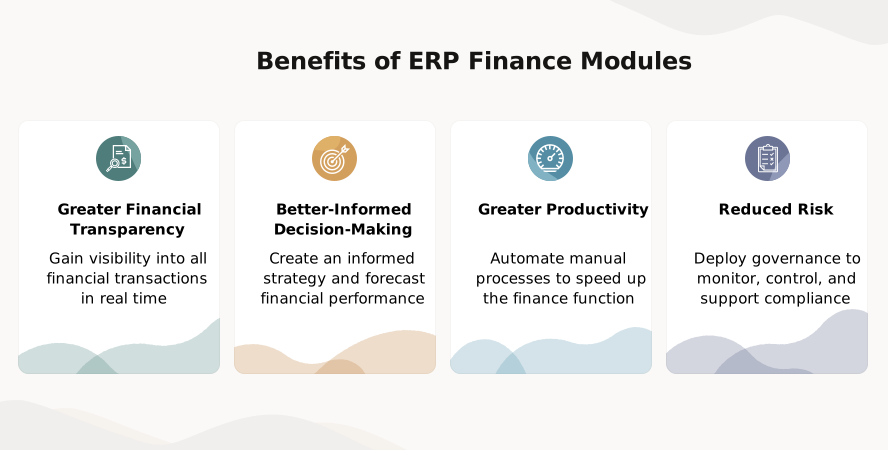
ERP systems reduce manual effort across finance and operations by automating repetitive tasks such as data entry, reconciliation, and reporting. By improving workflow automation and reducing reliance on spreadsheets, organizations can lower labor costs and reallocate finance teams to higher-value activities.
ERP Consulting and Implementation Service Fees
Consulting and implementation services typically represent the largest single cost component — 30–45% of total project spend. Engaging a certified Acumatica ERP consulting firm or qualified ERP consulting firm ensures your implementation is scoped, configured, and deployed correctly from day one.
Standard consultant rates for ERP implementation range from $150 to $350 per hour. A straightforward implementation may require 100–200 consultant hours. Complex deployments with heavy customization, multi-site rollouts, and deep integrations can exceed 700 consultant hours. Choosing an experienced Acumatica implementation consultant or Acumatica ERP consultant significantly reduces the risk of scope creep and timeline overruns.
Time Savings in Financial Close and Reporting
One of the most significant benefits of ERP modernization is faster month-end close and real-time financial reporting. By streamlining financial consolidation and eliminating manual processes, companies can reduce close cycles, improve reporting accuracy, and enable faster decision-making across portfolio companies.
Error Reduction and Data Accuracy
Manual processes often lead to data inconsistencies, reporting errors, and compliance risks. A modern cloud ERP system improves data integrity through centralized systems, automated validations, and standardized processes, reducing costly errors and improving audit readiness.
Scalability Across Portfolio Companies
For private equity firms, scalability is critical. ERP enables standardized processes across multiple entities, making it easier to integrate acquisitions, manage portfolio-wide operations, and support growth without increasing operational complexity or headcount.
Integration and Operational Efficiency
ERP platforms integrate core business functions—including finance, operations, and reporting—into a unified system. This eliminates data silos, improves visibility, and enhances operational efficiency, allowing organizations to operate with greater agility and control.

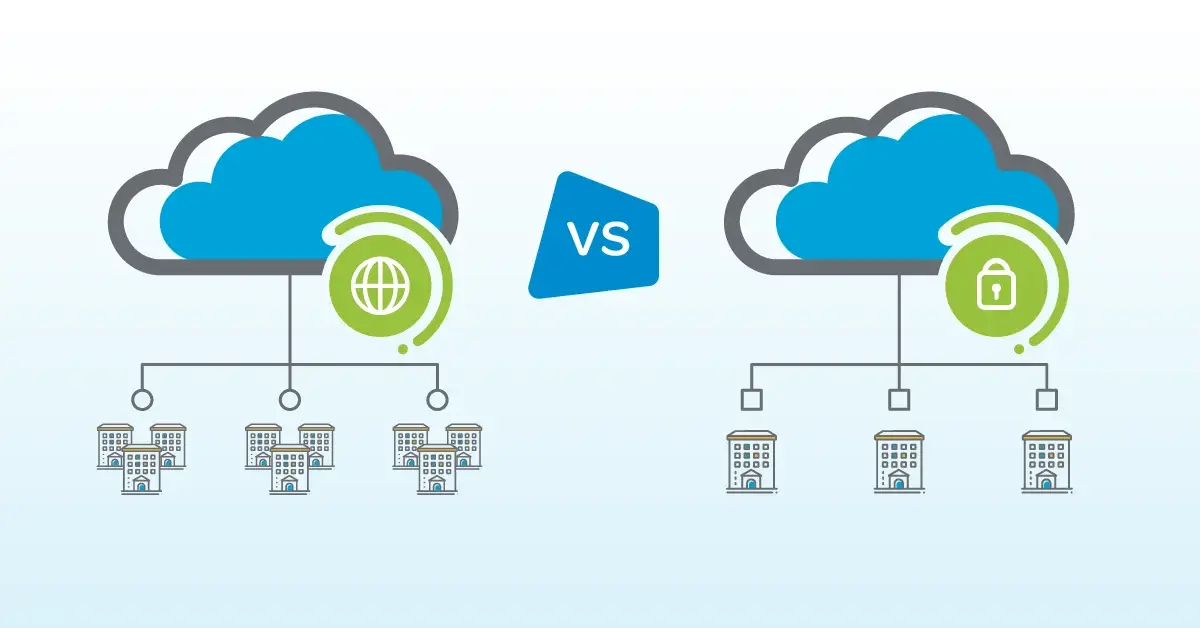
Cloud ERP vs. On-Premise ERP: Total Cost of Ownership Comparison
Selecting the right deployment model is one of the most impactful decisions in managing enterprise resource planning cost. Cloud ERP consulting services have grown significantly as organizations recognize the total cost of ownership advantages of SaaS-based platforms over traditional on-premise deployments.
|
Factor |
Cloud ERP (SaaS) |
On-Premise ERP |
|
Upfront Cost |
Low (subscription-based) |
High (perpetual license) |
|
Implementation Time |
3 – 6 months |
6 – 18 months |
|
Hardware Required |
None |
Significant investment |
|
Maintenance |
Vendor-managed |
Internal IT team |
|
3-Year TCO |
Generally lower |
Generally higher |
|
Scalability |
Instant, flexible |
Costly to scale |
For most mid-market organizations, cloud ERP delivers a 30–50% lower total cost of ownership over a five-year period compared to on-premise alternatives, primarily due to eliminated hardware costs, reduced IT staffing requirements, and vendor-managed maintenance.
Hidden ERP Implementation Costs Most Organizations Overlook
The most dangerous ERP budget gaps are not in the line items organizations plan for — they are in the costs no one mentions until the project is already underway. Every ERP consultancy with real implementation experience will tell you the following hidden costs are among the most common causes of budget overruns:
Scope Creep and Change Orders
Requirements that expand after the project has begun generate change orders that add both consulting hours and timeline delays. Organizations without a clearly defined scope document experience an average of 23% more change orders than those with formal project governance in place.
Internal Staff Time Costs
Your team will invest significant hours in requirements gathering, user acceptance testing, data validation, and go-live support. For a mid-market implementation, internal staff time can represent $30,000 to $80,000 in productivity cost that rarely appears in vendor proposals.
Post Go-Live Support Gaps
The first 60–90 days after go-live are the highest-risk period for any ERP deployment. Organizations that do not budget for dedicated hypercare support during this period face higher error rates, lower user adoption, and emergency consulting costs averaging $15,000 to $40,000.
Customization Technical Debt
Heavy customization during implementation creates long-term maintenance obligations. Custom code must be retested and updated with each platform upgrade, adding $10,000 to $50,000 in annual maintenance cost for highly customized deployments. Experienced Acumatica ERP consultants consistently recommend maximizing standard configuration before pursuing custom development.
7 ERP Cost Planning Mistakes to Avoid
Based on documented findings from Panorama Consulting and Gartner, the following planning failures are the most consistent drivers of ERP budget overruns:
• Underestimating data migration complexity — always audit your data before scoping the migration budget
• Ignoring change management — user adoption failure is more expensive than the implementation itself
• Failing to map all integrations upfront — undiscovered connections mid-project add $5,000–$50,000 each
• Choosing the wrong deployment model — selecting on-premise when SaaS fits your needs inflates 5-year TCO by 30–50%
• Not building a contingency reserve — standard projects require 15%, complex deployments require 20–25%
• Underestimating internal resource cost — document your team's time commitment before signing any contract
• Treating the ERP as a technology project rather than a business transformation — organizations that invest in process design before configuration achieve significantly better ROI outcomes
How to Reduce ERP Implementation Cost Without Cutting Corners
Reducing ERP implementation cost is possible without compromising the quality or capability of your deployment. The following strategies are consistently recommended by experienced ERP consulting firms:
Standardize Before You Customize
Every customization adds cost at implementation and every subsequent upgrade. Working with your ERP consultancy to redesign business processes around the system's standard functionality rather than customizing the system to match legacy processes consistently delivers the lowest total cost of ownership.
Invest in Pre-Migration Data Cleanup
Organizations that clean, deduplicate, and standardize their data before migration reduce data migration cost by 20–30%. This investment pays back immediately in reduced consultant hours during the migration phase.
Choose a Phased Implementation Approach
A phased rollout deploys core modules first and adds functionality in subsequent phases. This approach reduces initial implementation cost, improves user adoption, and allows the organization to capture ROI from the first phase before investing in the next.
Select a Certified Acumatica Consulting Services Partner
Working with a certified Acumatica ERP consulting firm rather than a generalist IT services provider significantly reduces implementation risk. Certified Acumatica implementation consultants bring pre-built best practice configurations, validated integration frameworks, and proven go-live methodology that reduce both timeline and cost.
Negotiate Multi-Year Subscription Commitments
Most cloud ERP vendors including Acumatica offer meaningful discounts for multi-year subscription commitments. A two or three-year contract can reduce annual licensing cost by 10–20% compared to month-to-month pricing.
ERP Implementation ROI: Is the Investment Worth It?
Understanding the return on investment from ERP implementation is as important as understanding the cost. Organizations that deploy ERP systems with proper planning and change management consistently achieve measurable operational and financial returns.
• Average ERP ROI payback period: 2 to 3 years for mid-market organizations
• Process efficiency gains: 20–30% reduction in manual accounting and finance processes
• Inventory cost reduction: 15–25% for manufacturing and distribution companies
• Reporting speed improvement: 60–80% reduction in time spent on financial close and reporting
• Error reduction: 40–60% decrease in data entry errors and reconciliation issues
For organizations deploying Acumatica with accounts payable automation, accounts receivable automation, and automated reconciliation, the operational savings alone often recover the full implementation cost within the first 18 months of go-live.
Frequently Asked Questions
ERP implementation is the process of deploying an enterprise resource planning system within an organization. It encompasses software configuration, data migration, system integration, user training, and go-live support. A full implementation typically involves an ERP consulting firm or certified implementation consultant managing the project from discovery through stabilization.
The average cost of ERP implementation for a mid-market organization in 2026 ranges from $150,000 to $750,000 for year-one total investment including software, services, data migration, integrations, and training. Small businesses can expect $10,000 to $80,000, while enterprise deployments routinely exceed $1,000,000.
Acumatica ERP implementation cost ranges from $8,000 for small business deployments to $750,000 or more for large enterprise rollouts. Acumatica's consumption-based pricing model means organizations are not penalized for adding users, making it one of the most cost-effective cloud ERP platforms for growing mid-market companies. The exact Acumatica ERP pricing depends on selected modules, transaction volume, and implementation complexity.
ERP implementation timelines range from 3 months for small cloud ERP deployments to 18 months or more for large enterprise on-premise rollouts. Most mid-market Acumatica ERP implementations are completed in 3 to 9 months when managed by an experienced Acumatica implementation consultant.
ERP system maintenance cost after deployment varies by deployment model. Cloud ERP platforms like Acumatica include maintenance in the annual subscription. On-premise ERP maintenance typically costs 15–22% of the original license value annually. Custom ERP development requires ongoing developer resources that can cost $50,000 to $200,000 per year.
Under US GAAP (ASC 350-40), certain ERP implementation costs can be capitalized, specifically costs incurred during the application development phase including configuration, coding, and testing of new functionality. Preliminary project costs and post-implementation training costs must be expensed. Organizations should work with their accounting software implementation consultant and auditors to correctly classify implementation expenditures.
Cloud ERP (SaaS) carries lower upfront costs through subscription pricing, eliminates hardware investment, and includes vendor-managed maintenance. On-premise ERP requires significant upfront perpetual license fees, server infrastructure, and internal IT resources for maintenance. Over a five-year period, cloud ERP typically delivers 30–50% lower total cost of ownership for mid-market organizations.
Our ERP implementation cost calculator uses industry benchmark data from Panorama Consulting Group's 2025 ERP report, Gartner implementation research, and documented cost data across thousands of mid-market deployments. The calculator provides a reliable planning range rather than a guaranteed quote. Actual costs will vary based on vendor-specific pricing, negotiated terms, and project scope.
The most effective strategies for reducing ERP implementation cost include standardizing business processes before customizing the system, cleaning data before migration begins, choosing a phased deployment approach, working with a certified ERP consulting firm, and selecting a cloud ERP platform to minimize hardware and maintenance costs.
Ready to Plan Your ERP Budget With Confidence?
ERP implementation is one of the most significant technology investments your organization will make. The difference between a successful deployment and a costly overrun almost always comes down to the quality of your planning, the accuracy of your cost estimates, and the expertise of your implementation partner.
Our ERP implementation cost calculator gives you a data-driven starting point built on real industry benchmarks — not vendor estimates designed to win a deal. Use it to establish your planning budget, evaluate proposals against market rates, and identify where your organization's unique requirements will drive cost above or below the average.
As a certified Acumatica consulting services partner, we bring proven implementation methodology, deep platform expertise, and a track record of on-time, on-budget ERP deployments across manufacturing, professional services, healthcare, finance, and retail. Whether you are evaluating Acumatica ERP pricing for the first time or planning a migration from a legacy system, our team is ready to deliver a customized cost analysis tailored to your specific requirements.
Contact our ERP consultancy team today to schedule a no-obligation consultation and receive a detailed cost projection for your organization.